
 USDT · STABLECOIN
Tether
Most widely traded stablecoin by volume. Deep liquidity across multiple blockchains.
Price
$1.00
24h
+0.0%
About Tether
What is Tether?
Tether (USDT) is a stablecoin pegged to the U.S. dollar: each USDT is designed to be worth $1. Issued by Tether Limited, it's the most widely traded stablecoin by volume, with deep liquidity across virtually every crypto exchange and blockchain.
USDT is available on more blockchains than any other stablecoin: Ethereum, Tron, Solana, Avalanche, and others. This ubiquity makes it extremely practical for trading, transfers, and global payments.
The main difference between USDT and USDC comes down to the issuer and transparency. USDC publishes monthly attestations; Tether publishes quarterly reserve reports. Both maintain their $1 peg reliably. Many holders use both depending on platform.
At a glance
- Launched
- 2014
- Issuer
- Tether Limited
- Backing
- Cash + Treasuries + other
- Networks
- ETH, TRX, SOL, AVAX, more
- Market position
- #1 stablecoin by volume
Price
Tether holds the $1 peg
-0.0%past 30 days
Stability you can see: pegged 1:1 to the U.S. dollar.
Market Cap
$142B
Supply
142B
All-time high
—
24h Volume
$72B
Where to buy
Find a Bitstop with Tether near you
Tether is available at over 3,000 Bitstop kiosks nationwide. Use the location finder to discover the nearest ATM that supports Tether.
Your wallet
Grab a wallet
Any wallet that generates a receive QR code works at a Bitstop ATM. New to crypto? Exodus takes a few minutes to set up.
Recommended for USDT
Trust Wallet
Multi-chain, supports USDT on every network
MetaMask
Best for ERC-20 USDT on Ethereum
Use any wallet that supports USDT. The ATM scans your receive address. That's all it needs. Hardware wallets like Ledger work too: open the companion app and scan the receive QR.
Pair it with the Bitstop App
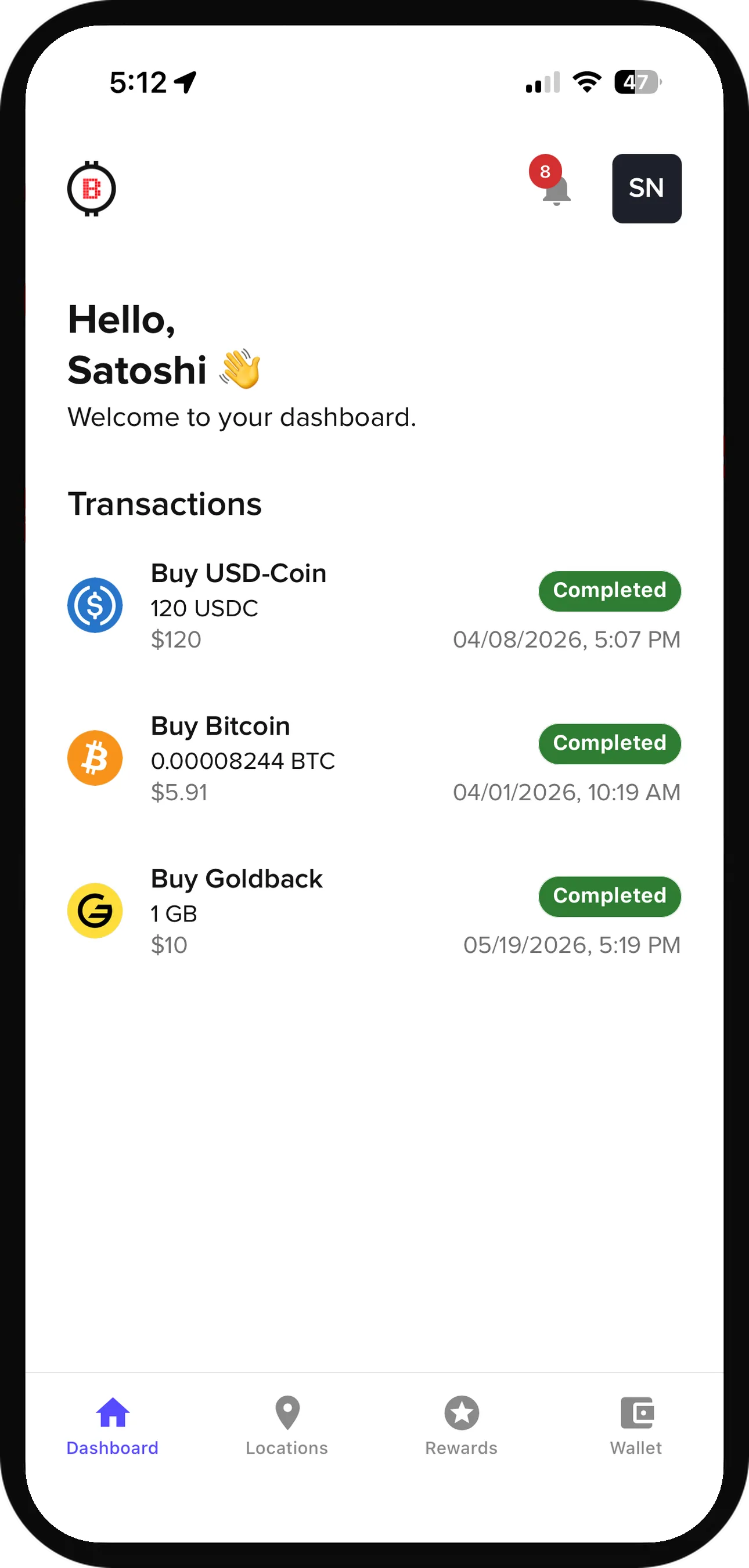
Register once, track transactions, and find ATMs on the go.


Frequently Asked Questions
Is USDT actually backed?
Yes. Tether publishes quarterly reports detailing its reserves, which include cash, U.S. Treasuries, secured loans, and other assets. The breakdown is published publicly and audited by BDO.
USDC or USDT, which is better?
Neither is universally 'better.' USDC is more transparent about reserves; USDT has more liquidity and is supported on more chains. For most users, the choice comes down to which platforms you use.
Which network should I receive USDT on?
It depends on fees and where you'll move it next. Ethereum is most secure but highest fees. Tron is very cheap and widely supported on exchanges. Solana is fast and cheap. Pick the network your destination wallet supports.
Has USDT ever lost its peg?
Briefly, during major market stress events. Each time it has returned to $1 within hours to days. The peg has held through multiple crypto downturns.