A Bitcoin ATM is a machine that takes cash and sends Bitcoin to a digital wallet you control. You don't need a bank account, a card, or an account at an online exchange. You need cash, a phone, and a wallet app.
Bitstop installed Miami's first Bitcoin ATM in 2013. Today we operate more than 3,000 across the United States and Canada. This article covers what the machines are, how they work, what they cost, and when a different option makes more sense.
What is a Bitcoin ATM?
The name borrows from the bank ATM, but the direction is reversed. A bank ATM gives you cash from your account. A Bitcoin ATM takes your cash and gives you crypto.
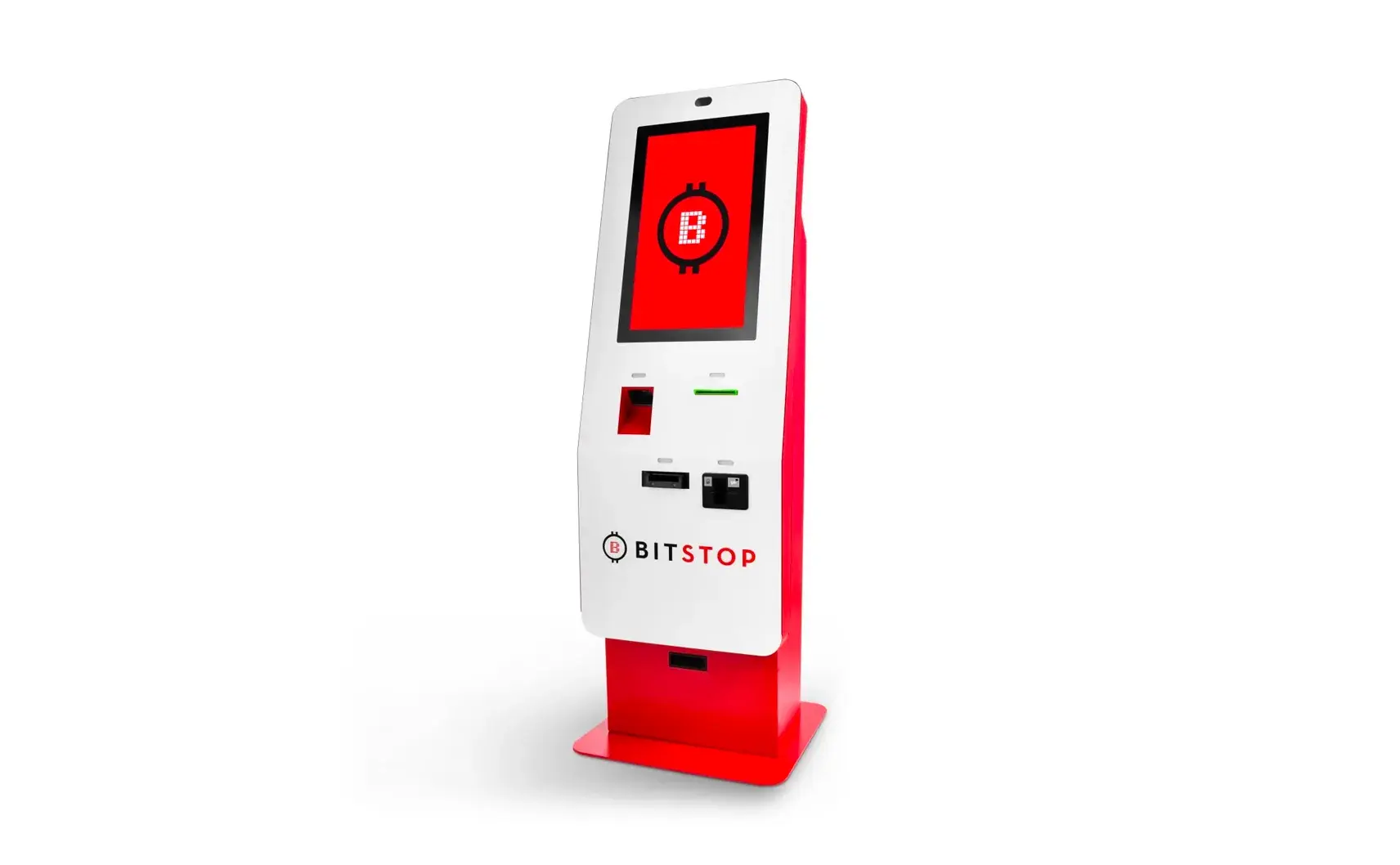
A Bitcoin ATM has a touchscreen, a bill acceptor, a scanner for QR codes and IDs, and a receipt printer. It's connected to the internet, and nothing on it links to your bank.
Most machines sell more than Bitcoin now. Bitstop ATMs also sell Ethereum, Dogecoin, XRP, Solana, stablecoins like USDC and USDT, and others (see the full list of supported cryptocurrencies). Some Bitstop locations also dispense physical gold. Some operators run "two-way" machines that also buy crypto back for cash. Bitstop ATMs are built for buying.
How does a Bitcoin ATM work?
Three pieces make it work: your wallet, the machine, and the blockchain.
Your wallet is an app on your phone that holds your crypto. It has two parts that matter:
- A receive address, which works like an account number. It's safe to share, and it's what the machine scans.
- A private key, which works like a password. Whoever holds it controls the crypto. Never share it with anyone.
A wallet where you hold the private key yourself is called "non-custodial" or "self-custody." That's the kind most people use with a Bitcoin ATM. Exodus and Trust Wallet are common choices.
The machine checks who you are (your phone number and PIN, plus an ID when the amount or your state requires it), reads your receive address from the QR code, counts your cash, and shows you the price.
The blockchain carries the Bitcoin. When you confirm, the operator sends Bitcoin from its own inventory to your address. The Bitcoin network records the transfer on its public ledger, and your wallet shows it once the network confirms it, typically within 10 to 30 minutes.
What is Bitcoin, briefly
Bitcoin is digital money that no bank or government issues. It launched in 2009 under the pseudonym Satoshi Nakamoto, and it runs on a network of computers that keep a shared public record of every transaction. There will only ever be 21 million bitcoin. The 20 millionth was mined in March 2026. You don't have to buy a whole one: Bitstop ATMs sell any amount from $10. More on our Bitcoin page.
Using a Bitstop ATM, step by step
- Tap "Buy Crypto" and choose Bitcoin.
- Enter your phone number and PIN. First visit? Register once at the machine, or ahead of time in the Bitstop app.
- Scan your ID if the machine asks for it.
- Open your wallet, tap "Receive," and scan the QR code.
- Check the rate and fee on screen, then insert your cash.
- Confirm and tap "Send." You get a printed and texted receipt.
The whole purchase takes about two minutes. Our step-by-step guide to using a Bitcoin ATM covers each screen in detail.
What does a Bitcoin ATM cost?
A Bitcoin ATM costs more than buying on an online exchange. Here's where the money goes:
- Cash handling. Armored carriers collect and process every bill.
- Real estate. The machines sit in stores that stay open when banks close.
- Compliance. Licensing, identity checks, and fraud monitoring run on every transaction.
- Speed. Crypto goes straight to your wallet on the spot, with no bank transfer to wait for.
At a Bitstop ATM, the screen shows your exchange rate, which starts from the live market price and may include a markup in some states, and the fee as a separate line before you insert any cash. Bitstop's fees page lists rates by state. Your price locks when your first bill goes in. Our fee guide explains how coupons and stablecoins bring the cost down.
Some Bitstop ATMs are run by independent operators who license Bitstop's software. At those machines, the operator sets the rate and fee. The operator is named on the help screen, your receipt, and the ATM map.
Why people use Bitcoin ATMs
- They're paid in cash. A Bitcoin ATM is one of the few ways to turn paper money directly into crypto.
- They don't have a bank account, or don't want to link one. Nothing at the machine connects to a bank.
- They want to start small. $10 is enough.
- They want it now. No waiting days for a bank transfer to clear.
- They want digital dollars. Stablecoins like USDC are designed to hold a steady $1 value, and cash-to-stablecoin is a quick way to move money or fund an online account. Here's how to buy USDC with cash.
When another option fits better
A Bitcoin ATM isn't the right tool for every purchase.
- Large, regular purchases from a bank account. An online exchange funded by bank transfer usually costs less for recurring buys.
- $10,000 to $100,000 at once. Bitstop's Private Client desk handles OTC purchases by wire with same-day settlement.
Where to find a Bitcoin ATM
Bitcoin ATMs are usually in places people already go: gas stations, convenience stores, grocery stores, shopping centers, and airports. Bitstop put the first Bitcoin ATM in Miami International Airport in 2019.
The Bitstop ATM map shows every machine near you, its hours, and which assets it sells. Some locations sell physical gold as well as crypto.
Are Bitcoin ATMs safe?
The machine is the easy part. Bitstop is registered with FinCEN as a money services business (NMLS ID 1833409, ATM OPS INC), verifies identity, and monitors transactions for fraud.
The real risk is scams. Crypto transactions are final, so scammers try to talk people into bringing cash to a Bitcoin ATM and sending it to a wallet the scammer controls. No government agency, bank, utility, or legitimate business will ever ask you to pay that way. Only ever scan your own wallet. Our fraud prevention page covers the common scripts and what to do if you've been targeted.
Find a Bitcoin ATM near you on the Bitstop map, or download the Bitstop app to register before your first visit.
FAQ
Is a Bitcoin ATM the same as a bank ATM?
No. A bank ATM gives you cash from your bank account. A Bitcoin ATM works the other way around: you put cash in and crypto goes to a wallet you control. It doesn't connect to a bank account or card.
Can you sell Bitcoin at a Bitcoin ATM?
At some operators' machines, yes. Bitstop ATMs are for buying. For larger purchases, Bitstop's Private Client desk handles OTC purchases by wire.
Do Bitcoin ATMs require ID?
Sometimes. Operators are regulated as money services businesses, so ID rules depend on the amount and the state. At a Bitstop ATM, the machine tells you when an ID scan is needed.
How much can I buy at a Bitcoin ATM?
At Bitstop, the minimum is $10. Daily limits depend on your verification tier and your state. The machine shows your 'Remaining Purchase Power' before you buy, and verifying your account raises it.
Can I buy coins other than Bitcoin?
At Bitstop ATMs, yes: Ethereum, Dogecoin, XRP, Solana, stablecoins like USDC and USDT, gold-backed tokens, and more. See supported cryptocurrencies.
Are Bitcoin ATMs safe?
The machine itself is safe to use. Bitstop is registered with FinCEN as a money services business and verifies identity and monitors transactions for fraud. The real risk is scams: never send crypto to a wallet someone else gave you. Crypto transactions are final.
Bitstop provides access to digital assets. Nothing here is investment advice, a price prediction, or a guarantee of value. Digital asset transactions are subject to identity verification, AML procedures, and sanctions screening. Availability, limits, and pricing vary by state and location.